OEM
Vietnam canvas tote and pouch OEM for Korean brands: 2026 sourcing guide, MOQ, costs and quality process
How should Korean cosmetics brands, event organizers and retail businesses source canvas tote bags, zipper pouches and reusable gift sets from Vietnam? An evidence-based guide to industry data, scope of customs statistics, hypothetical landed costs, sample approval, QC and a six-step OEM procurement process.
US$46bn+
Vietnam textile and garment exports in 2025 (entire sector)
US$17.84m
Korean 2024 imports from Vietnam under HS 420222
~1.5m
Vietnam footwear-and-bag industry workforce in 2026 government briefing
Key conclusions
- 1Vietnam 2025 textile exports of over USD46bn are a broad sector measure.
- 2Korean 2024 imports of HS420222 products from Vietnam at USD17.84m include plastic/textile handbags—not canvas OEM alone.
- 3Six-stage factory procurement emphasizes tech packs, golden samples, QC and delivery terms.
Impact on Korean companies — Korean B2B buyers can compare OEM suppliers on landed cost, lead time, sample quality, material evidence and order quantities
Contents
- 01Industry numbers: what is—and isn't—evidence of bag OEM demand?
- 02Three practical OEM product categories for Korean buyers
- 03Hypothetical landed-cost comparison for 1,000 tote bags
- 04Six procurement steps from design brief to delivery
- 05A practical Korean buyer's bag OEM RFQ checklist
- 06Frequently asked questions
- 07Start with one clearly defined OEM specification
A K-beauty brand is preparing 1,000 canvas tote bags for a product launch. An exhibition organizer needs 3,000 zippered pouches with a consistent logo. A Korean startup wants reusable welcome-kit packaging. For each, the cheapest factory quotation can become expensive if the logo is crooked, zippers fail or the event delivery date is missed.
Vietnam has an established textile and sewn-product ecosystem worth evaluating. But country-level exports do not prove that a particular OEM bag producer will meet a buyer's fabric, printing, quality or delivery requirements. This guide, current to 3 November 2026, explains a practical procurement route for canvas totes, pouches and branded gift sets.
Industry numbers: what is—and isn't—evidence of bag OEM demand?
A May 2026 Vietnamese government report quoted the Vietnam Textile and Apparel Association (VITAS) saying that 2025 textile and garment exports exceeded US$46 billion. The report also described employment of around 1.5 million people across the footwear-and-bag industry. Both figures indicate a substantial manufacturing ecosystem; neither separately measures canvas tote bags or private-label bag OEM orders.
For a somewhat closer customs reference, World Bank WITS/UN Comtrade reports that South Korea imported around US$17.84 million of HS 420222 products from Vietnam in 2024. The classification encompasses handbags with an outer surface of plastic sheeting or textile material—not only cotton canvas totes or promotional pouches.
WITS/UN Comtrade, Korea import records for plastic/textile-surface handbags. Not a canvas-only OEM market estimate.
Classification caveat: reusable shopping bags, carrying cases and packaging sacks may fall under different HS codes depending on construction, materials and function. It would be wrong to treat all HS 420222 trade as canvas tote OEM contracts, or use 2024 imports as the 2026 growth rate.
Three practical OEM product categories for Korean buyers
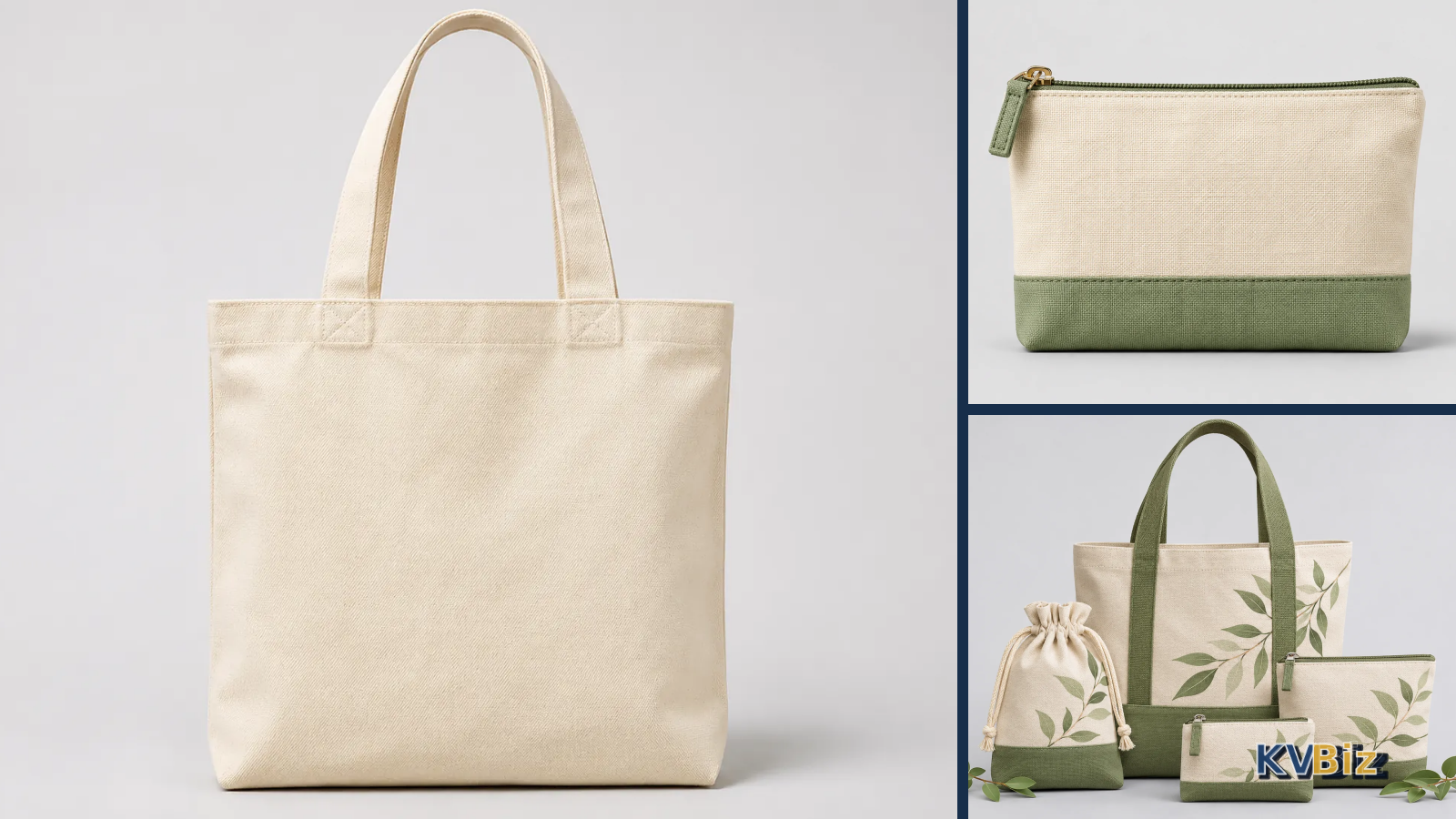
1. Canvas tote bags for retail and events
Start by specifying width, height, gusset, handles and expected load. 10oz, 12oz and 16oz cotton canvas can yield very different product structures and price points. Fabric weight markings alone do not establish tested durability; review real swatches and measured samples before approving.
2. Zipper pouches for K-beauty and event gifts
A pouch's apparent simplicity conceals several potential defects: zipper operation, corner stitching, raw-edge treatment, lining, opening width and logo registration. If the pouch ships with cosmetics or electronics, confirm fit, packaging and color consistency in the final set.
3. Reusable corporate gift sets
Matched tote bags, pouches and drawstring accessories can create a cohesive brand impression, but separate trims and subcontractors can introduce shade, stitch and packing variations. Approve the complete kit as a golden sample, not only its individual components.
| OEM product | Critical RFQ specifications | Sample approval focus |
|---|---|---|
| Canvas tote | Dimensions, fabric composition and weight, handles, print | Handle stress, base stitching, print position |
| Zipper pouch | Finished size, zipper, lining, logo placement | Zipper travel, seam alignment, corners |
| Gift kit | Piece count, colors, print, labels and packing | Matching shades, packing counts, damage |
| Retail private label | Barcode, outer labels, materials and packaging | Production consistency, origin labelling |
Hypothetical landed-cost comparison for 1,000 tote bags
The following numbers are entirely invented educational inputs to show procurement mathematics. They are not actual quotes, market averages, verified price ranges, factory commitments or delivery guarantees. We assume identical fabric, dimensions, artwork, packing and acceptance requirements, converting everything into Korean won for ease of comparison.
| Cost element | Made in Korea | Made in Vietnam |
|---|---|---|
| Product unit cost × 1,000 | ₩9,800,000 | ₩5,700,000 |
| Samples and setup | ₩250,000 | ₩600,000 |
| Quality inspection | ₩120,000 | ₩250,000 |
| Freight and packaging | ₩180,000 | ₩850,000 |
| Assumed import and other charges | ₩0 | ₩200,000 |
| Hypothetical landed total | ₩10,350,000 | ₩7,600,000 |
| Illustrative RFQ-to-delivery time | 24 days | 43 days |
KVBiz educational model only; no surveyed market or supplier pricing. Includes setup, freight, QC and assumed charges.
In this model Vietnam is ₩2.75 million (about 26.6%) cheaper, but the assumed lead time is 19 days longer. Real outcomes vary with fabric purchases, rework, defect rates, rush air freight, exchange rates, import requirements and confirmed Incoterms. A domestic supplier may win for urgent or frequently changing designs.
MOQ: why 300, 1,000 and 3,000 units should be priced separately
MOQ is not universal. It depends on minimum fabric dye lots, printing method, zipper and label requirements, factory capacity and sample setup. A 300-piece run may have steep setup costs per bag; 3,000 pieces may increase stock exposure and QC complexity. Ask manufacturers for three separate quotes: 300, 1,000 and 3,000 units, and include repeat-order pricing and leftover fabric arrangements.
Six procurement steps from design brief to delivery
- 01
Scope and RFQ
Sizes, fabric, quantity, branding and delivery target
- 02
Materials and artwork
Approve color swatches, zipper and print/embroidery method
- 03
Golden sample
Check sewn prototype, logo and tolerances
- 04
Purchase order
Confirm QC criteria and production milestones
- 05
Production inspection
Check seams, handles, zippers, print and packing
- 06
Export and delivery
Verify HS, origin documents, Incoterms and incoming QC
Suggested procurement checkpoints, not a guaranteed MOQ or timetable. Record the approver and deliverable at each stage.
| Phase | Evidence to request | Decision gate |
|---|---|---|
| 1. RFQ | Tech pack, dimensions, logo files, quantity tiers | Are all suppliers quoting identical specifications? |
| 2. Material approval | Physical swatches, color and trim references | Do quoted materials match approved samples? |
| 3. Golden sample | Approved prototype, seam and logo checks | Is the approved revision documented? |
| 4. PO and production | QC plan, milestone dates and defect remedies | Who is responsible for rework or late delivery? |
| 5. Quality inspection | Stitch, zipper, printing, size and packing checks | Is production consistent with the golden sample? |
| 6. Shipment | Invoice, packing list, shipping and origin paperwork | Are Korean import and arrival responsibilities defined? |
Responsible material claims: Never label a bag organic, recycled or eco-certified without substantiating the relevant materials and certificates. Product safety, Korean labeling and KC-related obligations depend on the intended use, age group, fabric and sales channel; confirm requirements for each SKU before import.
A practical Korean buyer's bag OEM RFQ checklist
- Type: tote, pouch, promotional set or retail private-label bag
- Size in mm: width, height, gusset, handle length and tolerances
- Fabric: composition, weight, color and whether lining is needed
- Artwork: logo file, print/embroidery technique, size, placement and rights
- Construction: stitches, reinforcement, zipper, labels and packing
- Quantity tiers: 300 / 1,000 / 3,000 and restock terms
- Quality: golden sample, inspection plan and nonconformance remedies
- Delivery: named place, Korean arrival date, mode and Incoterms® 2020 rule
ICC Incoterms® 2020 clarifies delivery tasks, costs and risk allocation; it does not settle product quality, trademarks, tariffs or preferential origin by itself. Verify the applicable Korean HS classification, tariff and labeling rules separately.
Frequently asked questions
What is the minimum order quantity for a Vietnam canvas tote OEM order?
There is no universal MOQ; request quantity-tier quotations for the exact material, logo and delivery terms.
Is Vietnam always cheaper than making bags in Korea?
No. The numbers above are an invented illustration. Compare tooling, inspection, freight, customs, rework and schedule risks as well as quoted unit cost.
How do we avoid misprinted logos or color differences?
Agree on a signed golden sample, approved color references, print placement tolerances and a pre-production test.
Can a buyer market the bag as eco-friendly or organic?
Only if materials and any applicable claims are supported by relevant documentation and certification; avoid unverified environmental claims.
What documents are needed for import into Korea?
Commercial documents, packing and transport records, origin evidence and product-specific labeling may be required. HS classification and tariffs need case-by-case review.
Start with one clearly defined OEM specification
The right Vietnam bag OEM partner is identified through clear specifications, proven sampling, measurable QC and delivered-cost comparisons—not a headline about national exports. Start with a non-confidential outline of fabric, dimensions, printing, volume and target date; discuss detailed proprietary artwork only after appropriate confidentiality arrangements.
**Request a Vietnam bag OEM RFQ consultation →**
Reviewed 3 November 2026. Textile exports and industry employment cover broader sectors, not canvas tote OEM sales. HS 420222 includes plastic/textile-surface handbags beyond canvas bags. All cost and lead-time inputs are fictional. Illustrative product photos were generated by AI and do not depict verified supplier deliveries.
Opportunities
- Branded goods, K-beauty sets and corporate merchandise sourcing
- Alternative production capacity for repeat orders
Risks
- Print, color, stitching and zipper defects
- Customs and shipment timing
- Unsubstantiated environmental claims
Recommended actions
- Request comparable 300/1000/3000-unit RFQs
- Approve golden sample and production QC standards
- Verify Korean tariff classification and shipment obligations
KVBiz · Vietnam Entry
Free assessment of your Vietnam entry & site selection
Share your sector, goals and expected scale, and we will outline the right region and industrial parks, labor/cost conditions and entry mode (entity, leased factory or partner). A precise quote follows once requirements are confirmed.
Your information is used only for assessment and consultation.
Sources & methodology
- 01베트남 정부 포털 (Chinhphu.vn) — 2026년 5월 베트남 섬유·의류, 신발·가방 산업 정부 간담회 / Government briefing on textiles, footwear and bags (primary source) ↗
- 02World Bank WITS / UN Comtrade — Korea imports by origin, HS 420222, 2024 (primary source) ↗
- 03International Chamber of Commerce — Incoterms® 2020 buyer and seller delivery responsibilities (primary source) ↗
- 04Korea Customs Service / data.go.kr — Korea Customs Service tariff schedule by item number, 2026 (primary source) ↗
- 05KVBiz Vietnam — KVBiz canvas tote, zipper pouch and custom OEM sourcing information ↗
2025년 섬유의류 수출과 산업 고용 수치는 캔버스 OEM 전용 수치가 아닙니다. HS 420222에는 캔버스 외 플라스틱·섬유 표면 가방이 포함됩니다. 비용·납기는 교육용 가상 입력값이고 사진은 AI 생성 제품 예시입니다.
Related insights
precision machining
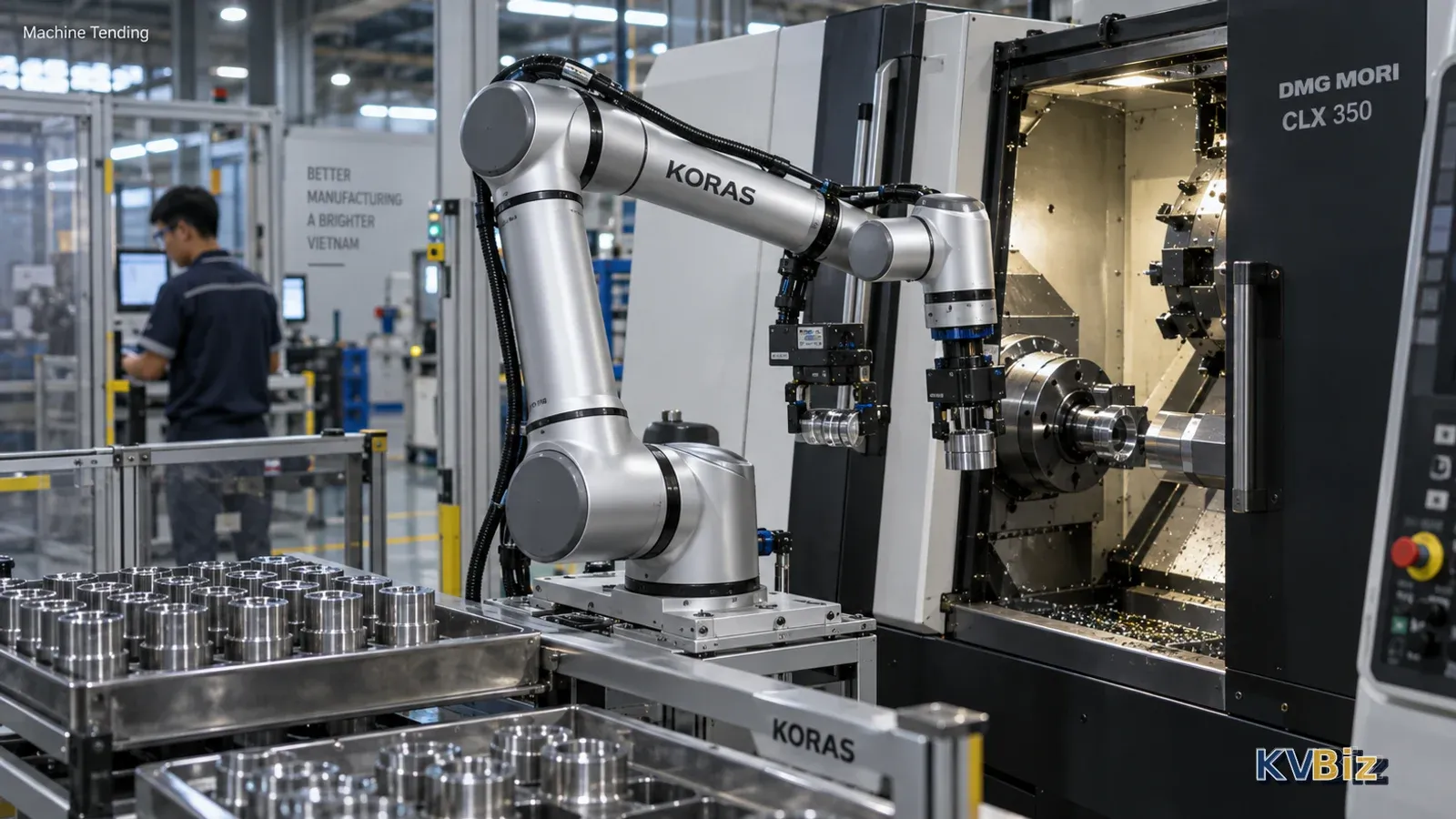
Why Korean manufacturers are evaluating precision machining outsourcing in Vietnam: 2026 data and a practical CNC sourcing workflow
South Korea accounted for US$5.7 billion of Vietnam's newly licensed FDI in January–September 2026, while Vietnam's processing and manufacturing output index grew 12.9%. These are macro indicators—not CNC outsourcing orders. A practical guide to CNC, sheet-metal and fixture sourcing, illustrative total-cost calculations, supplier qualification and a six-stage RFQ process.

cross-border-investment
Vietnam Circular 38 takes effect: what Korean companies should check before M&A, capital increases and profit remittance
Circular 38/2026/TT-NHNN took effect on 18 August 2026, reshaping foreign-investment FX administration in Vietnam. Korean investors should re-check ownership thresholds, investment capital accounts, M&A payment routes, deal currency and remittance documents.

IT_AI
The AI operating factory: A practical market-entry strategy for Vietnam
A plain-language guide to the business of managing GPUs, data, models and AI Agents — and a five-step route for foreign technology companies seeking their first paying customer in Vietnam.