Electronics assembly
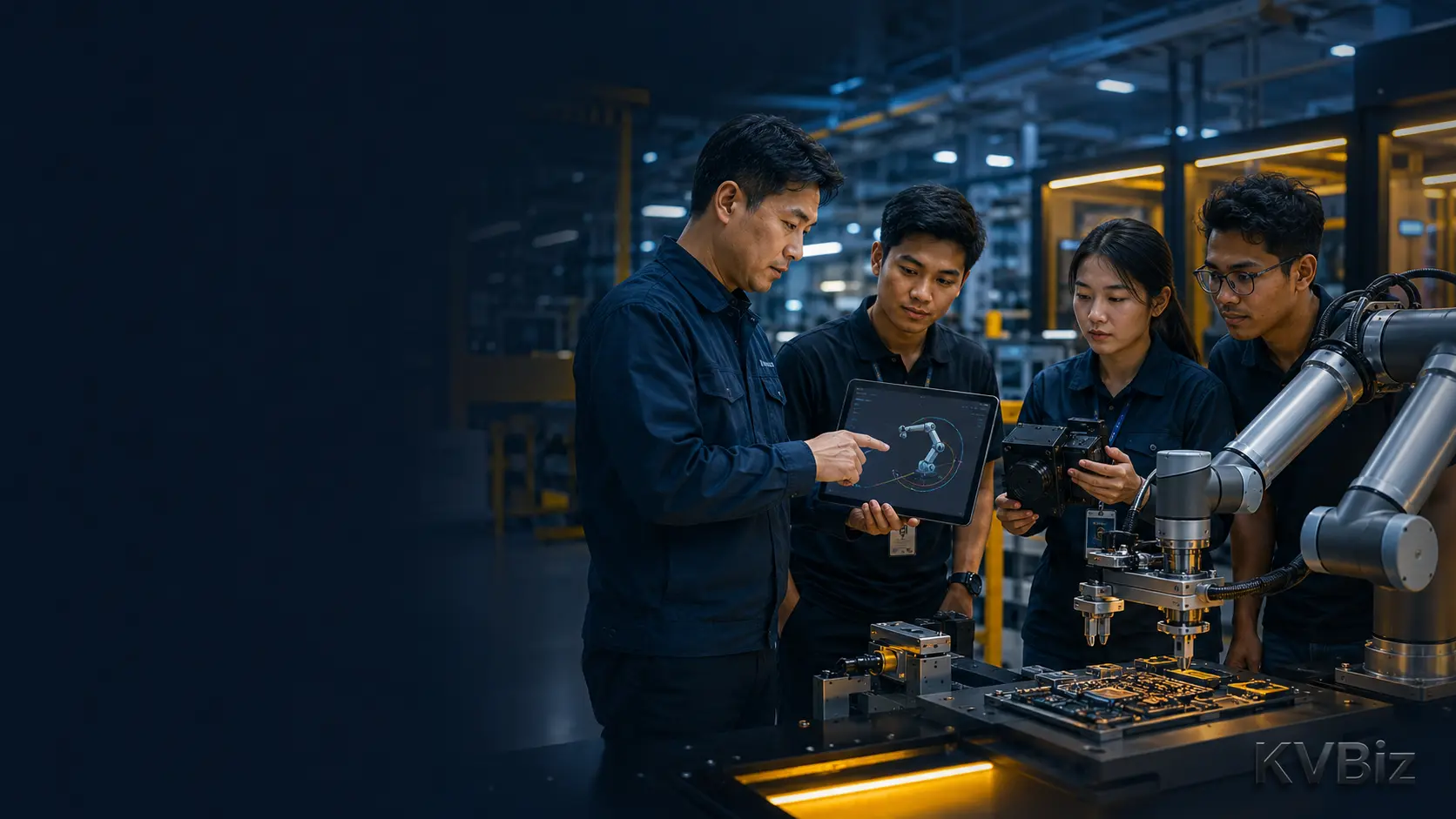
Connector insertion, alignment and fastening tasks requiring both vision and force
PHYSICAL AI · KOREA × VIETNAM DELIVERY
One delivery loop from task discovery and demonstration data to robot-policy development, cell integration and KPI validation.
START WITH ONE TASK
Instead of buying a platform first, we select one task by repetition, labor burden and quality variance, then agree on success criteria at the site.
Connector insertion, alignment and fastening tasks requiring both vision and force
Classification, defect isolation and tray rearrangement after visual inspection
Bin picking, piece picking, packing, tote movement and palletizing
Machine tending, material loading and repetitive operator-assistance motions
DELIVERY LOOP
Training data and field deployment share the same KPI, so each pilot result becomes input for the next improvement cycle.
Define task, safety and KPI
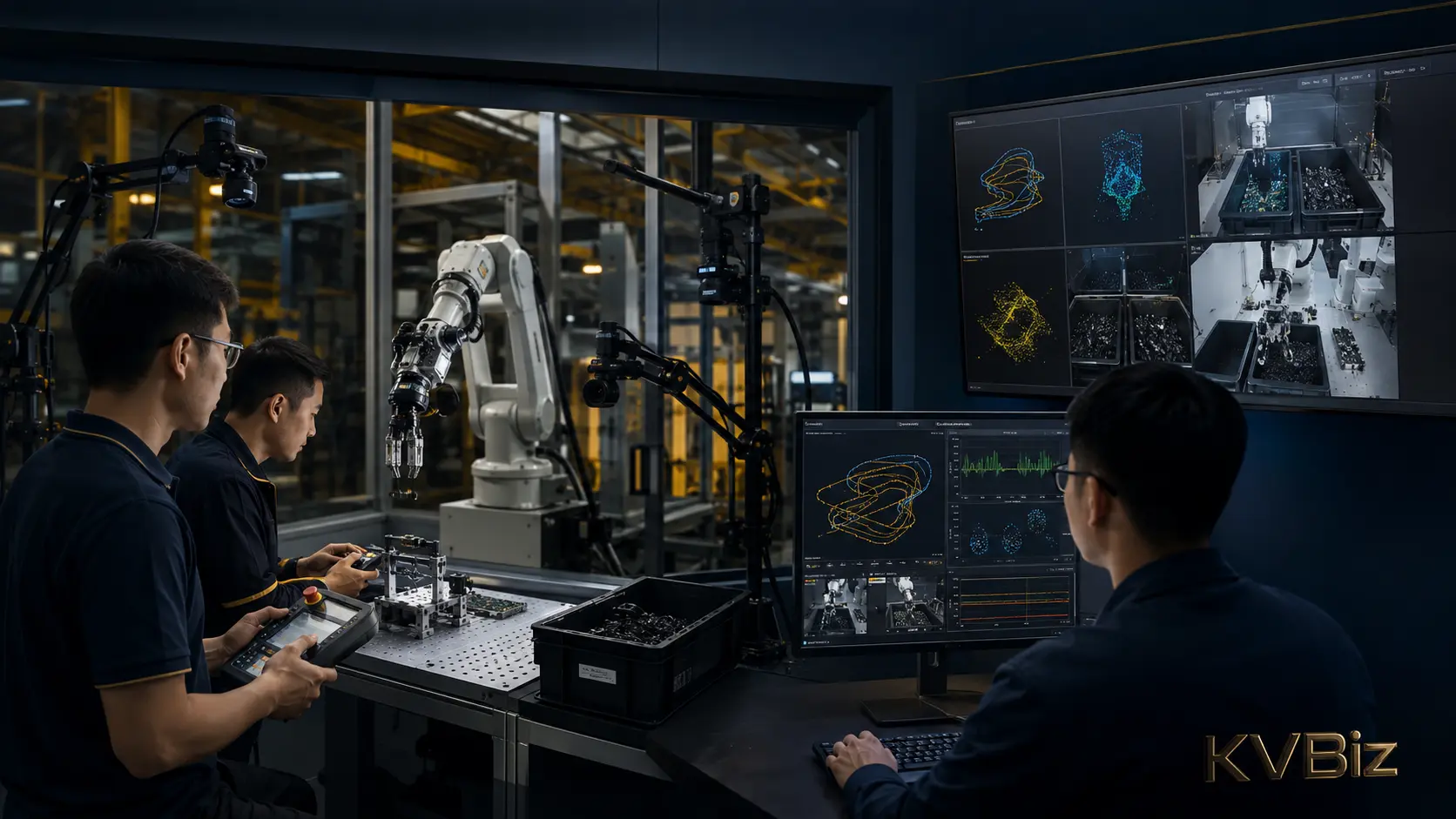
Capture demonstrations and sensors
QA and classify failures
Train and benchmark policy
Integrate and test the cell
Retrain from field logs
ENGAGEMENT OPTIONS
We define task candidates, safety and hardware constraints, data access, target KPIs and pilot scope.
For one task, we run data collection, a baseline policy and field validation.
After deployment, we improve data and policy with failure logs, new variations and changing production conditions.
ONE TEAM · TWO DELIVERY BASES
KOREA · CUSTOMER & FIELD
VIETNAM · DATA & ENGINEERING
WHAT YOU RECEIVE
Task feasibility and risk matrix
Data specification and QA criteria
Versioned training dataset
Baseline policy and reproducible evaluation
Field KPI and failure-mode report
Production transition and scale roadmap
Timeline and performance depend on the robot, gripper, sensors, data access, process variation and safety requirements. We agree on success and stop criteria during the Readiness Assessment before a pilot begins.
Share the current process, installed robot and target KPI. In the first meeting, we will map pilot fit and the next required step.